
Why Cornerstone Is a Faith-Based Program and What That Actually Looks Like Each Day
Quick Answer
At Cornerstone Learning Center in Memphis, TN, faith-based education means biblical values — kindness, honesty, generosity, and compassion — are part of how children greet each other, settle disagreements, and move through the day together. It goes beyond a chapel moment or a morning verse. Faith shapes the culture your child grows up inside.
A Morning That Tells You Something
A four-year-old arrives at our Southwind location and spots a classmate sitting alone by the cubbies. Without a prompt, she walks over and sits down next to him. Later, she will not be able to explain why. She just knew it was the right thing to do.
That kind of instinct does not arrive overnight. It grows slowly, through hundreds of small moments — a teacher who pauses to help a child find the right words for a big feeling, a classroom where generosity is practiced before it is praised, a community where every child hears their name spoken warmly every single day.
Families researching early childhood programs in the Memphis area often find that terms like “faith-based” and “values-driven” show up everywhere, but what they actually mean in practice can be hard to pin down. This post explains what those words mean at Cornerstone Learning Center — specifically, what faith looks like on an ordinary Tuesday.
Faith as a Daily Culture, Not a Scheduled Subject
At Cornerstone, faith is not an add-on to the school day. It is the atmosphere the school day runs inside.
Children begin each morning with Daily Bible stories, not because the stories end there, but because they set the tone for everything that follows. A story about generosity shows up again at snack time, when a child passes the crackers before taking his own. A story about courage comes back during a tricky puzzle or a first attempt at scissors. The stories give children language for their own experiences.
This is what Cornerstone means when it describes blending academics and faith practices to support the healthy development of the whole child. The academic content and the character content reinforce each other rather than competing for time.
For families who want faith to be more than a Friday chapel service, this daily integration is the practical answer to what that actually looks like.
What “Every Child Is Unique” Means in a Faith-Based Setting
One of the phrases families hear most often at Cornerstone is that every child shines bright when they feel loved, nurtured, and inspired. It is worth pausing on what that commitment requires in practice.
Children arrive with different temperaments, learning paces, family backgrounds, and emotional starting points on any given morning. Meeting each child where they are — academically and personally — takes educators who see the whole child, not just the milestone list.
NAEYC, the National Association for the Education of Young Children, identifies positive relationships between children and caring adults as a foundation of high-quality early childhood education. At Cornerstone, those relationships are built deliberately. Teachers learn each child’s name and the story behind it. They notice what a child finds hard and what lights them up. They greet families at the door and stay in communication throughout the week.
Faith-based education reinforces this approach because it gives the community a shared language for why every child matters. Children hear it in the stories. They see it in how adults treat them and each other.
What Hands-On, Faith-Integrated Learning Looks Like in the Classroom
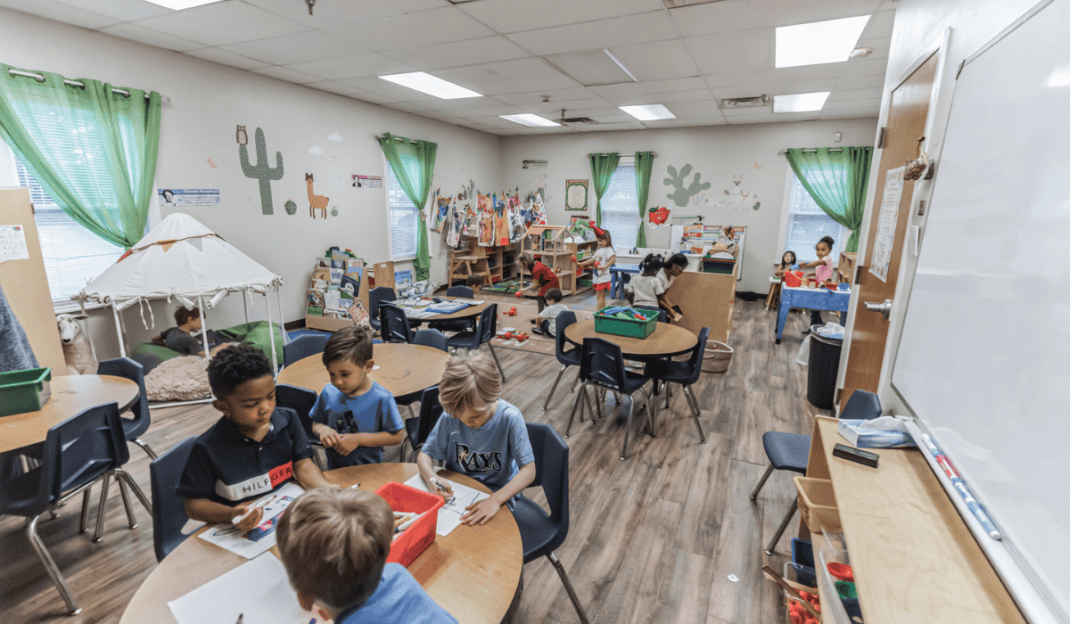
Cornerstone uses a traditional teaching approach to early childhood education, with hands-on activities woven through each program from Infants through School-Age. In practice, faith integration does not replace that hands-on learning — it runs alongside it.
A preschool classroom might work through a lesson on kindness by acting out a scenario together, then move directly into a math activity that involves sharing materials fairly. The connection is intentional. Children are not asked to hold faith separate from thinking, exploring, and building — they experience them as part of the same day.
Cross-subject integration at Cornerstone means a morning’s Bible story can connect to a literacy activity, a conversation about community helpers, or a cooperative building project. The academic skill and the character lesson live in the same hour.
For families who want their child’s school experience to feel like a natural extension of home — including the values being practiced there — this approach makes the connection explicit and consistent.
What Families Actually Notice After a Few Months
Parent and caregiver feedback at Cornerstone in Southwind often circles back to the same observation: their children are eager to come to school. One family put it this way in a review: “My babies are eager to go to school every day. We are so thankful for each of these teachers.”
Eagerness to show up is a meaningful signal. It usually means a child feels safe, known, and connected to the people in their classroom. In a faith-based setting, that feeling of belonging is something educators build intentionally — through consistent routines, warm greetings, daily stories, and a community culture where every child is treated as valuable.
For families who chose Cornerstone because they wanted strong family values alongside academic preparation, that eagerness is often the first sign that both goals are being met together.
Frequently Asked Questions
What does faith-based mean at Cornerstone Learning Center in Memphis, TN?
At Cornerstone, faith-based means biblical values — kindness, generosity, honesty, and compassion — are woven into daily routines, classroom culture, and how educators interact with children and families. Children hear Daily Bible stories each morning, and those themes connect to how the day unfolds.
Do families have to share a specific faith background to enroll?
Cornerstone describes itself as an inclusive community. Families who want their child to grow up in a values-grounded, loving environment are welcomed, regardless of where they are in their own faith journey.
How does Cornerstone connect faith with academic learning?
Through cross-subject integration, Cornerstone links character lessons to academic activities throughout the day. A morning Bible story might connect to a literacy activity, a cooperative project, or a math concept — so children experience faith and learning as part of the same experience rather than separate parts of the schedule.
What age groups does Cornerstone Learning Center in Memphis, TN serve?
Cornerstone serves children from Infants through School-Age, with programs for Toddlers, Preschool, Pre-K, and Summer Camp as well. Each program is designed around the developmental stage of the children it serves.
What makes Cornerstone different from other preschool programs in the area?
Cornerstone combines a traditional teaching approach, hands-on learning, and daily faith integration in a setting that aims to feel like a natural extension of home. The staff is trained to meet each child where they are developmentally while building a community grounded in shared values.
A Community Worth Visiting in Person
Reading about a faith-based program can only tell you so much. The culture here — the way teachers greet children at the door, the way the school day begins, the way the classroom feels — is something you notice in person.
If you are exploring early childhood programs and want to see what daily faith integration actually looks like in a warm, academic environment, a visit is the clearest answer to your questions.
We would love to welcome your family! Come visit Cornerstone Learning Center and schedule a tour in Memphis, TN to meet our team and see our community in action.
Related Posts
All Posts